


MicroVitamin+ Powder
MicroVitamin+ Powder
Combines the MicroVitamin foundation with 4 premium upgrades:
Full 30-Ingredient List
Couldn't load pickup availability


-
A Balanced Diet Comes First
MicroVitamin+ is designed to complement a healthy diet, not replace it. Getting nutrients from a variety of whole foods is essential. MicroVitamin+ aims to fill the gaps when your diet falls short.
The MicroVitamin+ Difference
MicroVitamin+ contains everything in the MicroVitamin capsules — the same encapsulated D3, K2, Lutein, Zeaxanthin, and Lycopene; the same methylated B-vitamins; the same chelated trace minerals — plus four powder-only additions that don't fit in capsule form.
✓ Collagen & Clinical-Dose Creatine: Collagen Peptides 12.5g, plus Creatine 5g to support strength and exercise performance (3). The powder format makes these higher doses possible.
✓ Gut & digestive support: Psyllium Husk 2.5g, a soluble fibre that supports digestive regularity and gut health (7), plus an extra 1g of taurine, an amino acid used in many metabolic processes.
✓ One Scoop Replaces Your Stack: Instead of juggling a multivitamin, collagen, creatine, and fiber supplements, MicroVitamin+ combines 30 ingredients into a single daily scoop. Available in Mixed Berry or Unflavored.
-


See the Full 30-Ingredient List, Benefits & Evidence
| Ingredient | Benefit & Evidence |
|---|---|
| MicroVitamin+ Exclusive | |
| Collagen Peptides 12.5g (Hydrolyzed) | Collagen Peptides Hydrolyzed collagen peptides, included at 12.5g. |
| Creatine Monohydrate 5g | Strength & Exercise Performance The most evidence-backed supplement for physical performance. Hundreds of peer-reviewed studies have evaluated creatine, with nearly 70% reporting significant improvements in exercise capacity.(3)* |
| Psyllium Husk 2.5g (Soluble Fiber) | Digestive Health A widely studied soluble fiber that supports digestive regularity and gut health.(7)* |
| Taurine 1g (additional) | Metabolism An amino acid the body uses in many metabolic processes, included as an additional 1g.(8)* |
| Core Ingredients (also in MicroVitamin Capsules) | |
|
Choline, B-Complex & Methylators
Choline Bitartrate 181.5mg, Methylated B12 & Folate, Thiamine, Riboflavin, Niacin, B6, Biotin, Pantothenic Acid.
|
Cognition & Focus (COSMOS-aligned) Aligned with COSMOS trial findings to support cognitive function. Includes choline and bioactive (methylated) B-vitamins — well-absorbed forms that suit common MTHFR gene variations.(1)* |
| Trimethylglycine (TMG) 500mg (Betaine Anhydrous) | Methylation Support Trimethylglycine (betaine) is a naturally occurring methyl donor, included at a measured 500mg dose.(4)* |
| Vitamin C Calcium Ascorbate 45mg | Antioxidant & Immune Support Provides antioxidant support to help combat free radicals and supports normal immune function.(9)* |
|
Bone Density Complex
Encapsulated Vitamin K2 as K2VITAL® DELTA (MK-7 90mcg), Encapsulated Vitamin D3 as AlgeD3™ (1,000IU), Boron Glycinate (1mg).
|
Skeletal Strength Encapsulated D3 and K2 with boron, which support bone strength and healthy calcium use.(10)* |
| Magnesium Taurate 126mg (elemental) | Muscle & Relaxation Magnesium with taurine — both well-absorbed forms — supporting normal muscle function and relaxation.(11)* |
|
Essential Trace Minerals
Zinc Glycinate, Selenium Glycinate, Copper, Manganese, Chromium, Iodine.
|
Glycinate Chelation Delivered in gentle glycinate/chelated forms for high bioavailability (+43% vs gluconate) and easy digestion.(12)* |
| Hyaluronic Acid 200mg | Hydrated Skin A clinically studied oral dose that supports skin moisture and elasticity from within.(2)* |
|
Eye Carotenoids
Lutein 10mg + Zeaxanthin 2mg (from Lutemax® 2020).
|
Macular Pigment Density RCTs at this dose have shown significant increases in macular pigment optical density — the carotenoid layer that filters short-wavelength light in the retina. Encapsulated for stability against light and oxidation.(5)* |
| Lycopene 10mg (encapsulated, LycoBeads®) | Antioxidant A carotenoid found in tomatoes, included for antioxidant support. Encapsulated for stability against light and oxidation.(6)* |
| No Vitamin A or E Excluded | Only What You Need Intentionally excluded based on research suggesting potential risks associated with high-dose supplementation.(13)* |
Quality Assurance
We’ve partnered with a USA supplement manufacturer called ‘Makers Nutrition’ to produce MicroVitamin+. Their facilities are GMP audited and FDA registered, so you can be assured that MicroVitamin+ is meticulously produced and thoroughly tested for quality.
Below are the stamps of approval that Makers Nutrition qualify for:


Combined Nutrients for Unbeatable Value
MicroVitamin+ offers a streamlined approach to daily nutrition, combining essential vitamins and minerals into one convenient package.
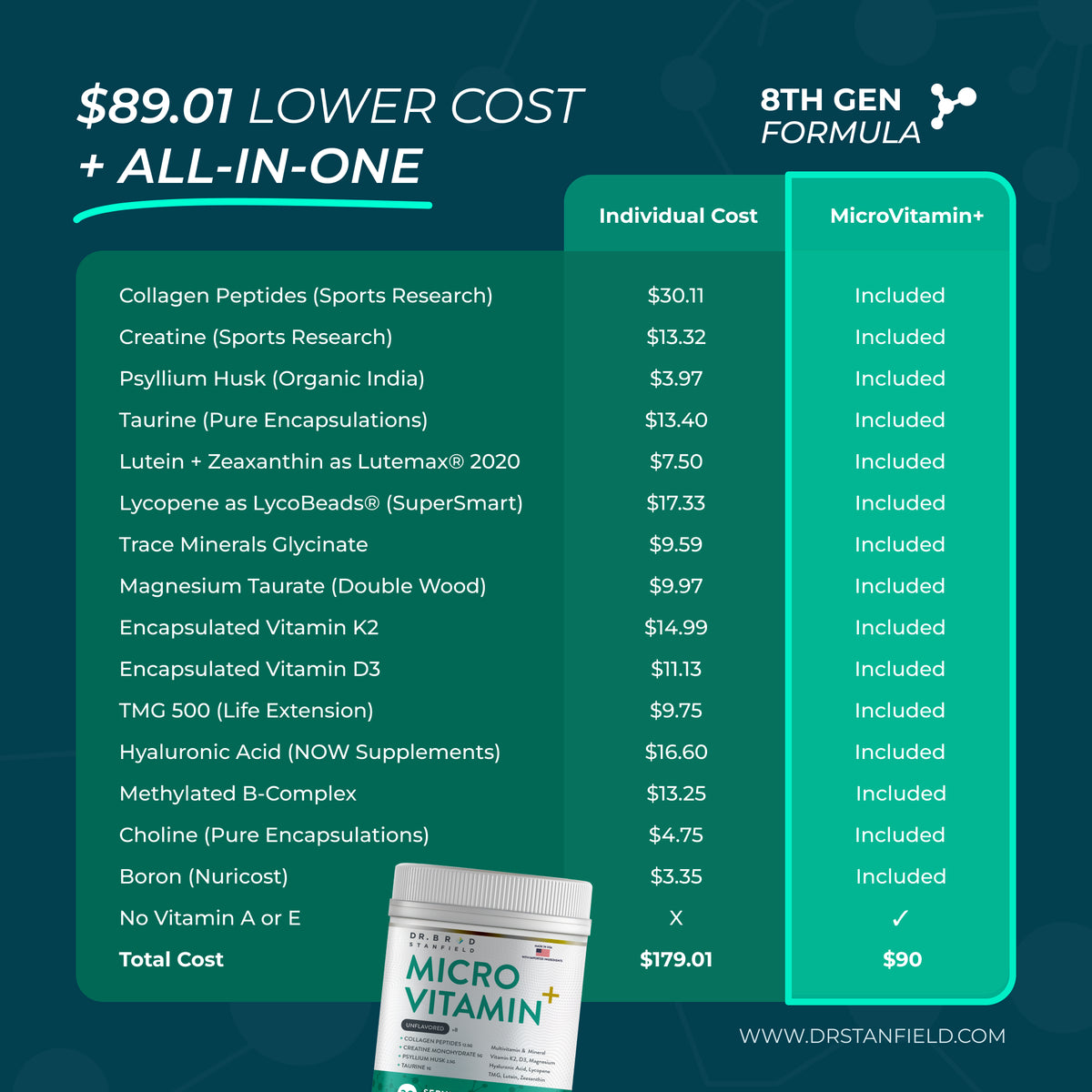
Purchasing these nutrients separately would cost you roughly $179.01 per month, but MicroVitamin brings them all together for only $90 per month on a 3-month subscription.
Not only does MicroVitamin+ save you $89.01 per month, but it also eliminates the hassle of managing multiple supplements, ensuring you receive the right balance of nutrients to support your health without the extra cost.
| Individual Cost | MicroVitamin+ | |
|---|---|---|
| Collagen Peptides (Sports Research) | $30.11 | Included |
| Creatine (Sports Research) | $13.32 | Included |
| Psyllium Husk (Organic India) | $3.97 | Included |
| Taurine (Pure Encapsulations) | $13.40 | Included |
| Lutein + Zeaxanthin as Lutemax® 2020 (Doctor's Best) | $7.50 | Included |
| Lycopene as LycoBeads® (SuperSmart) | $17.33 | Included |
| Trace Minerals Glycinate (Smarter Vitamins) | $9.59 | Included |
| Magnesium Taurate (Double Wood) | $9.97 | Included |
| Encapsulated Vitamin K2 as K2VITAL® DELTA MK-7 | $14.99 | Included |
| Encapsulated Vitamin D3 (Pure Encapsulations VESIsorb®) | $11.13 | Included |
| TMG 500 (Life Extension) | $9.75 | Included |
| Hyaluronic Acid (NOW Supplements) | $16.60 | Included |
| Methylated B-Complex (Pure Encapsulations) | $13.25 | Included |
| Choline (Pure Encapsulations) | $4.75 | Included |
| Boron (Nuricost) | $3.35 | Included |
| No Vitamin A or E | ||
| Total Cost | $179.01 | $90 |
Frequently Asked Questions
What's Improved in MicroVitamin+ Formula Version 8?
There are some big upgrades in MicroVitamin+ formula version 8.
The headline change is the carotenoid stack: lutein increased from 0.25 mg to 10 mg, lycopene from 0.3 mg to 10 mg, and zeaxanthin added at 2 mg — now at the doses used in clinical trials, and all three delivered in encapsulated forms (Lutemax 2020 and LycoBeads) so they survive the daily mix-and-drink without oxidising.
Vitamin D3 and Vitamin K2 have also moved to encapsulated forms (AlgeD3 and K2VITAL DELTA). Doses are unchanged, but encapsulation protects these fat-soluble vitamins from light and moisture once opened, so the amount on the label is the amount you get on day 60.
Vitamin C has been switched from ascorbic acid to calcium ascorbate — same 45 mg dose, but buffered and gentler on the stomach.
Niacin is down from 35 mg to 16 mg (100% RDA). The mineral profile is rebalanced toward the RDA: copper doubled to 0.9 mg and zinc lifted to 11 mg (both 100% RDA); iodine pulled back to 75 mcg, since most people get plenty from diet. No fillers or binders, and the vegetarian capsule is titanium-dioxide free.
MicroVitamin+ is produced in the USA in an FDA-registered, GMP-certified facility.
For more information, see the full changelog.
Why do I see dark red and yellow-orange flecks?
That's completely normal and a sign the formula contains the ingredients we list on the label. MicroVitamin includes three natural carotenoids: lycopene (which gives tomatoes their deep red colour), lutein, and zeaxanthin (the orange-yellow pigments concentrated in leafy greens and egg yolks).
Does the psyllium husk in MicroVitamin+ reduce absorption of the vitamins and minerals?
No. In human clinical studies, psyllium supplementation has not been shown to cause clinically meaningful changes in vitamin and mineral status compared with placebo, even when used for several months and at doses higher than the 2.5 g of psyllium in one serving of MicroVitamin+
- Reference: “Psyllium treatment had no clinically significant effects on vitamin and mineral status.” — American Journal of Clinical Nutrition
- Reference: “Psyllium... makes little practical difference to availability of co-ingested calcium.” — PubMed
- Reference: “No significant between group differences in serum micronutrient concentrations after... psyllium fibre supplementation.” — Springer Nature
Why Doesn't MicroVitamin+ Contain Vitamin A or E?
Vitamin A and E are deliberately left out, based on research suggesting potential risks from high-dose supplementation of these fat-soluble vitamins.
Learn more about the research behind this decision here.
Why doesn't MicroVitamin+ contain lithium orotate?
Lithium isn't an established nutrient: there is no recommended daily intake for it anywhere, and no recognised deficiency. The interest in low-dose lithium comes mainly from animal studies and from population studies of lithium in drinking water, which can't show cause and effect. The human trials so far have been small, most used prescription lithium at doses far higher than a supplement contains, and all of them enrolled people who already had memory problems. Lithium orotate itself hasn't yet been tested in a completed human trial. Lithium is also not permitted in supplements in the UK or EU, and is restricted in Australia and Canada, where MicroVitamin+ is sold. We'll keep watching the research.
Why doesn't MicroVitamin+ contain astaxanthin?
Astaxanthin is a red pigment from algae. Most human trials are small, short and funded by the companies that make it, and they mostly measure blood markers rather than outcomes you would notice. A widely shared 2024 study from the Interventions Testing Program, a US National Institute on Aging research program, suggested it could help male mice live longer, but a second Interventions Testing Program study in 2026 did not repeat that result. If larger independent trials show a clear benefit, we'll look at it again.
Why doesn't MicroVitamin+ contain cocoa flavanols?
Cocoa flavanols were tested in COSMOS, a large trial of more than 21,000 older adults (the same trial that tested a daily multivitamin). The cocoa extract did not significantly change the trial's main outcome. Some secondary results were encouraging, and we're watching the long-term follow-up closely. For now, adding it would bring a bitter taste, a small amount of caffeine and higher cost, without a clear benefit we could stand behind.
Why is collagen being removed from MicroVitamin+?
When we reviewed the collagen research in detail, we found that most skin trials were run or paid for by companies that sell collagen, and most compared collagen with a powder containing no protein at all. The one trial that compared collagen with the same amount of ordinary protein (milk protein) found no difference in skin hydration or elasticity. So we couldn't be confident that collagen does more than the extra protein itself. A future version of MicroVitamin+ will not contain collagen, which also means it will no longer contain any animal-derived ingredient from collagen. Current stock still contains collagen.
I've been following the research on supplements and healthy aging for quite a while, and I've tried different things. Eventually I decided MicroVitamin+ powder is the optimal combination. I don't need lots and lots of bits and pieces and separate orders — this feels like exactly what I need. The other important thing is the trust I have in the brand, so I don't have to keep an eye on every single little change. And for me, it's good value for money.
Just great to have all relevant ingredients together in one single powder. Feel healthy and grateful for the rigorous application of serious science!

I ❤️ the Micro powder!! Tastes great, so easy to prepare, most importantly I don’t have to fiddle with 20 little bottles! Love it, one and done! Previously, it was hit or miss taking vitamins due to all the bottles, pills, never knowing what strength to take, how to combine use! Geesh!
I’ve only taken the powdered drink daily for about 15 days, I’m hoping to generate a little added energy with consistency.
Thanks Doc!!!

It’s been very convenient “all in one” to use iand the auto ship has been equally helpful. When I used to take a multiple vitamin along additional supplements, it seemed like I was always running low of supplies for one or more at different times… so what would happen with my busy schedule, I’d exhaust the supply and then be without it until I had time to shop to replace it.
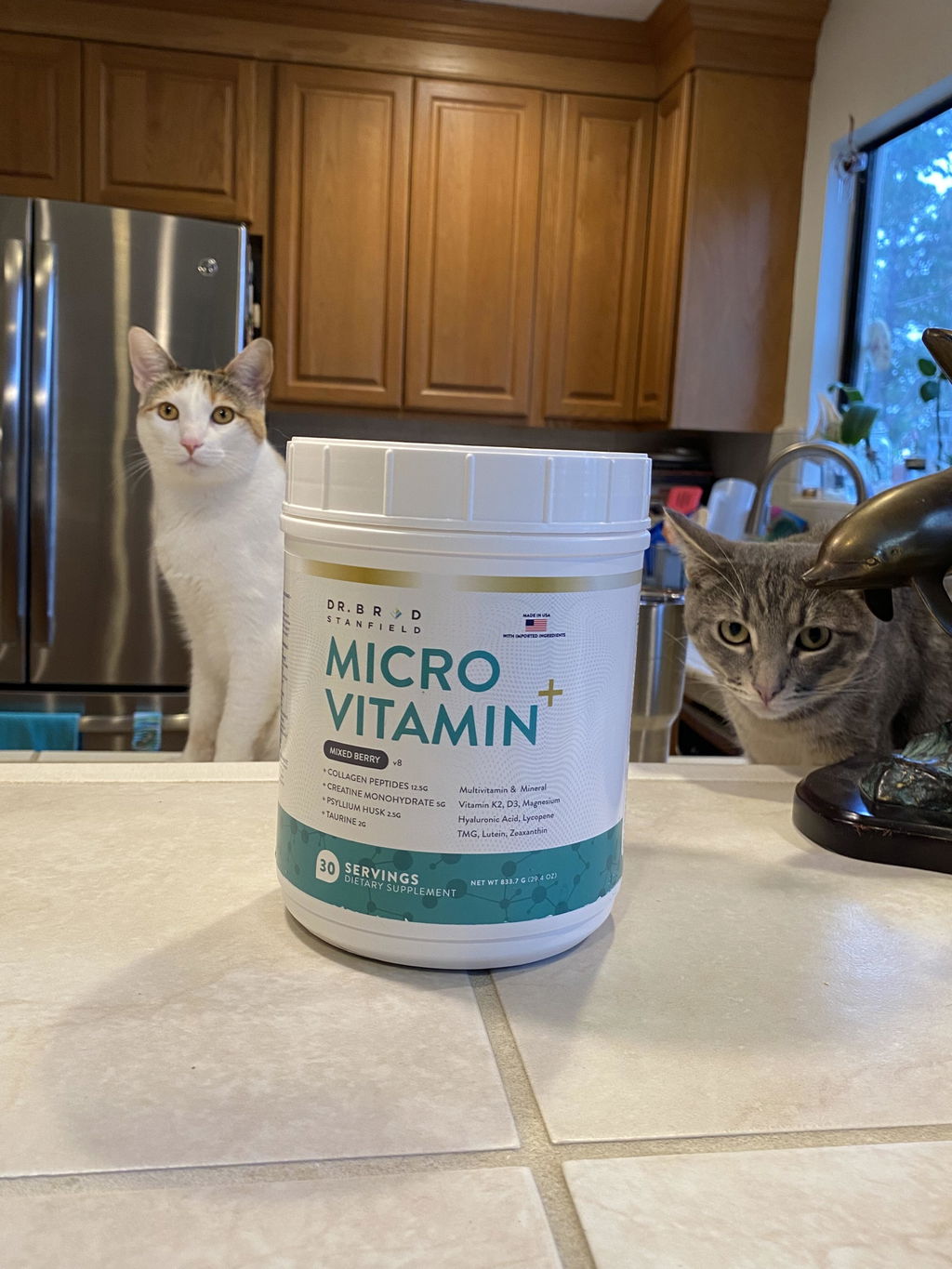
I am a 69 year old who has a metabolic age of 54, thank God.
Aiming to use Microvitamin + as part of a planned out fitness and longevity routine.
I try to make sure I consume it an hour before cardio at the gym to get the benefit of the collagen
But on resistance training days I use after training in other to maximize effect of creatine.

I use it in fruit smoothies. I can feel the difference. Now can you formulate a powder that good for MEN 50+ (and women too)? I'm older than everybody in the gym (83). Thanks again for the quality and the formulation.

Everything all in one sure simplifies everything!

I recently switched from MV and I am currently on my 2nd box of MicroVitamin+ Powder. Grateful for the additional benefits from creatine and psyllium husk which I earlier had to take seperately.
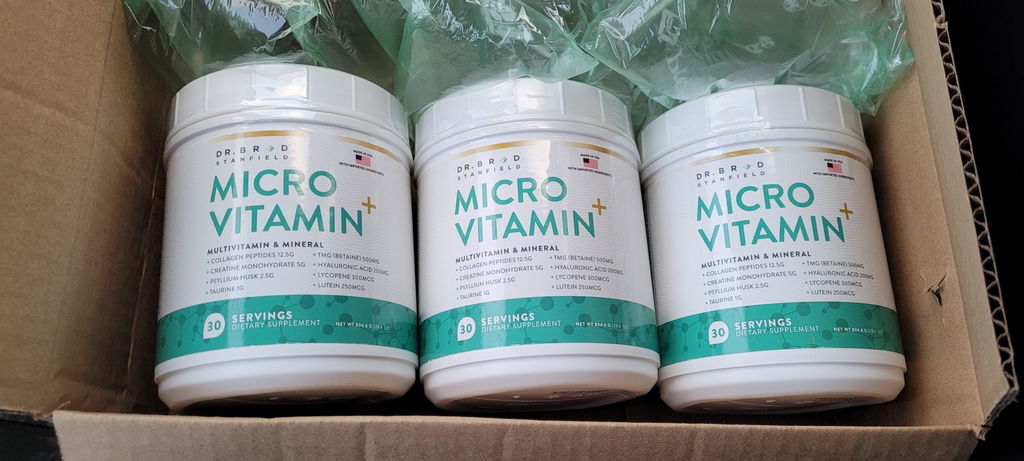
Evidence-backed ingredients, and the formula is updated based on new literature

I've had a slight improvement of my tinnitus. Difficult to know if that's from the MicroVitamin+ powder or not, but it's a nice effect so far. The ingredients are well thought out

MicroVitamin+ powder has almost everything I need in one scoop, and it makes it a lot easier to manage my supplement stack. I also really like that it doesn’t contain mega doses of vitamins. Just well-balanced amounts that complement a healthy diet rather than overload it.

Love this product. It saves me time every day and I feel confident I’m getting the right mix of supplements to ensure I maximise my health span. More flavours please 🙏
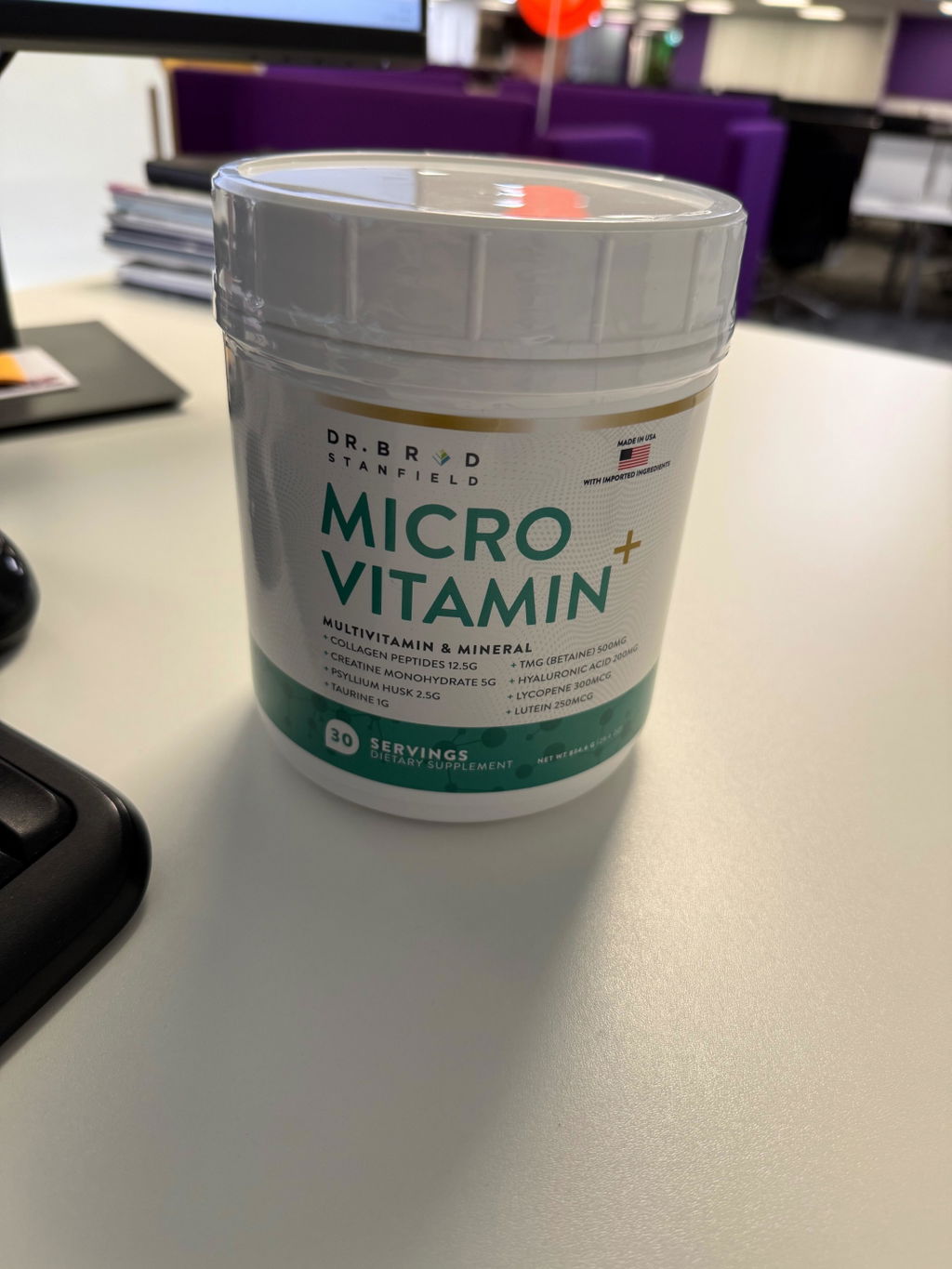
MicroVitamin+ combines many of the supplements I was already taking into one, easy to use product

Helps to combine many of the supplements that I was already taking into one product. The ingredients are correctly dosed

Conveniently combines many of the supplements that I was already taking (such as creatine and collage peptides) so MicroVitamin+ makes it much easier to manage

I felt more energy, which might be from the B12. A lot of the beauty of MicroVitamin+ is the simplification, since I was already taking Creatine for example

No complains so far. Great alternative to buying multiple individual ingredients or overdosing with standard multivitamins, while at the same time lacking some crucial ingredients.
Have used Microvitamin for over a year and recently started using Microvitamin plus as enjoy the convenience of added creatine, etc. I appreciate the evidence behind the formulation of this product!
Really just started, but so far I have to be honest, I don't love the taste. I know it would probably taste better when added to a smoothie, but I don't usually have a smoothie in the morning.
I can say I'm feeling a bit more energetic when I take it, but for me it'll take more time to really see and feel the difference.
Everything I need is one scoop.
Good contents, packaging etc. I prefer the power format. But the ingredients added to the capsule ingredients (collagen, creatine, psyllium etc) do not justify the significantly higher monthly price.
Hi Peter, thank you for sharing your feedback. Purchasing these nutrients separately would cost you roughly $179.01 per month, but MicroVitamin brings them all together for only $90 per month on a 3-month subscription. Not only does MicroVitamin+ save you $89.01 per month, but it also eliminates the hassle of managing multiple supplements, ensuring you receive the right balance of nutrients to support your health without the extra cost.
I like your product very much!
I take it with water every morning.
I took it once with my yogurt but I was afraid that I lost some powder in the cup…
It is easier for me to take capsules.
I've been sold on the Microvitamin "tablets" since they came out. However... the Powder doesn't mix. You have pellets (collagen?) on the surface no matter how hard you stir or shake. And the husk will be a thick slime at the bottom. It is actually cheaper to buy your fiber, collagen, and creatine separately! I would buy a powder that was same as tablets, So back to pills for me. If I have to gulp something down I would rather it be tablets than liquid goo.
Thanks Ralf for your review. Yes the psyllium husk does thicken when stirred into water, and for the upcoming v9 formula we're switching to acacia fiber that mixes a lot better. Please email me at brad@microvitamin.com so that I can replace your MicroVitamin+ powder with the capsules as you've requested
I like unflavoured because you get all the ingredients you need every day with the prefered taste of the yoghurt or anything you choose.
I love the bulk powder formulation of Dr Brad’s Microvitamin. It’s tasty and very easy to use, and it replaces a half dozen separate supplements I used to take. And I really feel the difference; after 5 weeks of daily use I am more energetic and peppy.
Great
Limited Supply, Maximum Quality
MicroVitamin+ is a new supplement, and as we ramp up production while ensuring the highest quality possible, there’s a supply shortage.
To allow as many people as possible to use MicroVitamin+, we’ve put a limit of twelve bottles per customer.
We appreciate your understanding as we strive to provide the highest quality product for you and your loved ones.
References:
(1) Baker, L. D., Manson, J. E., Rapp, S. R., Sesso, H. D., Gaussoin, S. A., Shumaker, S. A., & Espeland, M. A. (2023). Effects of cocoa extract and a multivitamin on cognitive function: A randomized clinical trial. Alzheimer's & Dementia, 19(4), 1308–1319. https://doi.org/10.1002/alz.12767
(2) Hsu, T. F., Su, Z. R., Hsieh, Y. H., Wang, M. F., Oe, M., Matsuoka, R., & Masuda, Y. (2021). Oral Hyaluronan Relieves Wrinkles and Improves Dry Skin: A 12-Week Double-Blinded, Placebo-Controlled Study. Nutrients, 13(7), 2220. https://doi.org/10.3390/nu13072220
(3) Buford, T. W., Kreider, R. B., Stout, J. R., Greenwood, M., Campbell, B., Spano, M., Ziegenfuss, T., Lopez, H., Landis, J., & Antonio, J. (2007). International Society of Sports Nutrition position stand: creatine supplementation and exercise. Journal of the International Society of Sports Nutrition, 4, 6. https://doi.org/10.1186/1550-2783-4-6
(4) National Institutes of Health (NIH). Dietary Supplements for Exercise and Athletic Performance: Fact Sheet for Health Professionals. https://ods.od.nih.gov/factsheets/ExerciseAndAthleticPerformance-HealthProfessional/#betaine
(5) Stringham, J. M., Stringham, N. T., & O'Brien, K. J. (2017). Macular Carotenoid Supplementation Improves Visual Performance, Sleep Quality, and Adverse Physical Symptoms in Those with High Screen Time Exposure. Foods, 6(7), 47. https://doi.org/10.3390/foods6070047
(6) Chen, J., Song, Y., & Zhang, L. (2013). Effect of Lycopene Supplementation on Oxidative Stress: An Exploratory Systematic Review and Meta-Analysis of Randomized Controlled Trials. Journal of Medicinal Food, 16(5), 361–374. https://doi.org/10.1089/jmf.2012.2682
(7) van der Schoot, A., Drysdale, C., Whelan, K., & Dimidi, E. (2022). The Effect of Fiber Supplementation on Chronic Constipation in Adults: An Updated Systematic Review and Meta-Analysis of Randomized Controlled Trials. The American Journal of Clinical Nutrition, 116(4), 953–969. https://doi.org/10.1093/ajcn/nqac184
(8) Tzang, C. C., Chi, L. Y., Lin, L. H., Lin, T. Y., Chang, K. V., Wu, W. T., & Özçakar, L. (2024). Taurine reduces the risk for metabolic syndrome: a systematic review and meta-analysis of randomized controlled trials. Nutrition & Diabetes, 14, 29. https://doi.org/10.1038/s41387-024-00289-z
(9) National Institutes of Health (NIH). Vitamin C: Fact Sheet for Health Professionals. https://ods.od.nih.gov/factsheets/VitaminC-HealthProfessional/
(10) Zhang, Y., Liu, Z., Duan, L., et al. (2020). Effect of Low-Dose Vitamin K2 Supplementation on Bone Mineral Density in Middle-Aged and Elderly Chinese: A Randomized Controlled Study. Calcified Tissue International, 106, 476–485. https://doi.org/10.1007/s00223-020-00669-4
(11) National Institutes of Health (NIH). Magnesium: Fact Sheet for Health Professionals. https://ods.od.nih.gov/factsheets/Magnesium-HealthProfessional/
(12) Gandia, P., Bour, D., Maurette, J. M., et al. (2007). A bioavailability study comparing two oral formulations containing zinc (Zn bis-glycinate vs. Zn gluconate) after a single administration to twelve healthy female volunteers. International Journal for Vitamin and Nutrition Research, 77(4), 243–248. https://doi.org/10.1024/0300-9831.77.4.243
(13) Hamishehkar, H., Ranjdoost, F., Asgharian, P., Mahmoodpoor, A., & Sanaie, S. (2016). Vitamins, Are They Safe?. Advanced Pharmaceutical Bulletin, 6(4), 467–477. https://doi.org/10.15171/apb.2016.061
Questions/Comments?
If you would like any further information about MicroVitamin, please contact us using the form below
