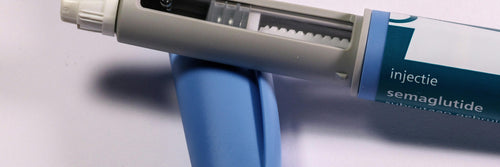
A revolutionary approach to cholesterol-lowering has changed the landscape of cardiovascular medicine. For decades, LDL cholesterol has been recognised as a central driver of heart disease. But recent breakthroughs have moved well beyond statins — into the world of gene-guided therapies that can reduce heart attack and stroke risk by double digits.
This article covers the decades of science that led to this moment, the landmark trials that proved it works, and what this means for the future of heart disease prevention.
Table of Contents
- Key Early Discoveries
- From Target to Treatment
- From Treatment to Endpoint Impact
- From Secondary to Primary Prevention
- Oral PCSK9 Inhibitors
- References
Key Early Discoveries
In the late 1990s, geneticist Catherine Boileau stared at the lab notebook in front of her. Its pages were covered in cholesterol readings so bizarre they made no biological sense.

Her team in Paris had been studying a French family with frighteningly high cholesterol. Heart attacks before 50. LDL-cholesterol levels that didn't budge. It looked exactly like classic familial hypercholesterolaemia — except for one problem: the genes that usually cause the condition were normal.
There were no mutations in the LDL receptors or APOB. Nothing that could explain why cholesterol in this family behaved like a runaway train.
The key mutation driving the problem had to be somewhere else. And finding it carried enormous implications. There was a gene exerting a powerful influence on cholesterol levels — one no one had yet identified. If it could be found, it might open the door to potent new treatments for heart disease.
Finding the right gene is like looking for a needle in a haystack. The process is slow and often involves years of dead ends. But the evidence started pointing to a location on chromosome 1. Somewhere in the region 1p32, Boileau suspected, there was a gene no one fully understood — one that could upend what was known about cholesterol biology.
Meanwhile, 6,000 kilometres away in Montréal, Canada, another scientist was chasing his own mystery.
Nabil Seidah had spent years cataloguing a family of enzymes called proprotein convertases. They were obscure, unglamorous proteins that snipped other proteins into active forms. His team had recently characterised one member, a gene with the clunky name NARC-1. They didn't know what it did. They only knew where it sat in the genome. 1p32.
Across the ocean, Catherine Boileau's French team saw this and paused. What were the odds? Boileau's group sequenced NARC-1 in their hypercholesterolaemia family. They hit the jackpot. A single change in the gene — just one amino acid — made the enzyme overactive. And that tiny tweak caused LDL cholesterol to skyrocket.
It was the missing piece. They renamed the gene PCSK9.
But there was one more crucial discovery that filled out the picture.
While the French group was learning that too much PCSK9 caused dangerous cholesterol levels, scientists in Texas were seeing the opposite.
Helen Hobbs and Jonathan Cohen launched a simple but brilliant project in the year 2000. They collected DNA from thousands of Dallas residents and linked it to their medical records to see what patterns emerged.
In some participants, they noticed astonishingly low LDL cholesterol levels. Not borderline low. Ridiculously low.
They checked the usual suspects — LDL receptor, APOB. Nothing. Then they checked PCSK9. They identified two distinct mutations in this population. This time, though, the mutations weren't making the gene overactive. They were breaking it.
People who essentially lacked PCSK9 had cholesterol levels cardiologists could only dream of — and they were perfectly healthy.
Researchers began to put the pieces together. Overactive PCSK9 caused dangerously high LDL cholesterol levels. But turning off PCSK9 caused lifelong LDL reduction and extraordinary protection from heart disease.
Suddenly, the path forward snapped into focus: blocking PCSK9 could substantially lower LDL safely. These discoveries gave scientists one of the clearest target validations in modern drug development.
From Target to Treatment
By the mid-2000s, PCSK9 had been transformed in scientific understanding from an obscure protease into a biological switch controlling LDL cholesterol. But translating that insight into a workable therapy was another battle entirely.

Drug companies had been burned before. Many "promising" cholesterol pathways turned into dead ends. And PCSK9 presented unique challenges. With many drug targets, researchers can create a simple chemical that binds to a specific site on a targeted protein — like a key that fits a particular lock.
But the PCSK9 protein is large and complex. The usual strategy doesn't work. Instead, researchers needed to create a much more complex structure to bind to and deactivate the protein — more like designing a glove that exactly fits a hand. Creating this kind of treatment has traditionally been extremely expensive.
But the genetic data was too clear to ignore. People born with broken PCSK9 genes had:
- Near-ideal LDL their entire lives
- Extremely low risk of heart disease
- No developmental problems
- And no obvious downsides
In drug development, this kind of biological pathway is exceedingly rare. PCSK9 was that rare exception. So Amgen took the gamble.
Amgen scientists designed what's called a monoclonal antibody that could latch onto circulating PCSK9 and neutralize it. PCSK9 naturally binds to and deactivates LDL-cholesterol receptors in the liver and elsewhere. When that activity is blocked, more LDL-cholesterol gets pulled out of the blood by those receptors.
An early trial put the concept to the test. And the results were jaw-dropping. LDL cholesterol levels fell up to 81% on top of the reduction already achieved by statins [1].
In the trials (AMG 145 n = 85, placebo n = 28), hypercholesterolemic adults receiving low- to moderate-dose statins were randomized to multiple SC doses of AMG 145: 14 or 35 mg once weekly ×6, 140 or 280 mg every 2 weeks ×3, 420 mg every 4 weeks ×2, or matching placebo. LDL-C was reduced up to 64% (p < 0.0001) after a single dose ≥21 mg and up to 81% (p < 0.001) with repeated doses ≥35 mg weekly [1].
Patients who had struggled with statin intolerance and stubbornly high LDL cholesterol suddenly had a new tool — one that behaved like a biological cheat code.
From Treatment to Endpoint Impact
But the impact on LDL cholesterol alone wasn't the real test. The critical question was whether blocking PCSK9 from destroying LDL receptors would actually prevent heart attacks, strokes, and heart-related deaths.

Amgen committed to a massive cardiovascular outcomes program — the kind that costs hundreds of millions, runs for years, and has no guarantee of success.
The FOURIER trial involved 27,564 participants with heart disease who were already on statin therapy. Half were placed in the treatment group, receiving either 140 mg every 2 weeks or 420 mg monthly of evolocumab, Amgen's PCSK9 inhibitor. The other half were given a matching placebo [2].
The trial showed that evolocumab cut major cardiovascular events by 15%. Relative to placebo, 9.8% of evolocumab patients experienced a major cardiovascular event vs. 11.3% in the placebo group (hazard ratio, 0.85; 95% CI, 0.79 to 0.92; P<0.001) [2].
Looking at a smaller subset of events — heart attacks, strokes, and heart-related deaths — the risk reduction was an even greater 20%: 5.9% in the treatment group vs. 7.4% in the placebo group (hazard ratio, 0.80; 95% CI, 0.73 to 0.88; P<0.001) [2].
It was a triumph, though somewhat expected. In patients with existing arterial plaque and very high risk, aggressive LDL-lowering should help.
From Secondary to Primary Prevention
But clinicians were left wondering: What if treatment started earlier?
In the FOURIER trial, many participants had already had a heart attack or stroke. Could this approach prevent the first event, not just the second or third?

LDL-cholesterol-lowering has a key property: the earlier treatment begins, the more benefit accrues. This makes intuitive sense. But early prevention trials present significant obstacles — they require far larger numbers, far longer follow-up, and far more funding.
The TIMI Study Group — the same group behind many of the definitive statin trials — decided to take on the question directly. They enrolled 12,257 patients across 33 countries with atherosclerosis or high-risk diabetes in the VESALIUS-CV trial. None had ever had a heart attack or stroke. All had LDL ≥90 mg/dL despite standard therapy [3].
Participants were randomized to receive evolocumab (6129 patients) or placebo (6128). The median follow-up was 4.6 years [3].
About a year into the study, LDL-cholesterol levels had dropped an average of 55% from baseline in the treatment group [3].
The final results, published in November 2025 in the New England Journal of Medicine, were clear: evolocumab prevents first cardiovascular events in high-risk patients who have never had a heart attack or stroke.
For the composite of death from coronary heart disease, myocardial infarction, or ischemic stroke (3-point MACE), the treatment group saw a 25% reduction: 336 patients (6.2%) in the evolocumab group vs. 443 (8.0%) in the placebo group (hazard ratio, 0.75; 95% CI, 0.65 to 0.86; P<0.001) [3].
For the 4-point MACE outcome — which added ischemia-driven revascularization — the risk reduction was 19% (747 [13.4%] vs. 907 [16.2%]; hazard ratio, 0.81; 95% CI, 0.73 to 0.89; P<0.001) [3].
No evidence of increased adverse events was found [3].
VESALIUS-CV gives researchers confidence in high-risk primary prevention. But it raises an important question: how can this strategy be made easy enough, affordable enough, and accessible enough to use earlier in the disease course — perhaps even in lower-risk individuals?
Right now, the biggest barrier to PCSK9 therapy isn't the biology — it's the delivery. These drugs are injections. And they're expensive. Both factors limit how widely they can be deployed.
Oral PCSK9 Inhibitors
That's why another development published literally the day after the VESALIUS-CV results is so significant.

It concerns an entirely new class of PCSK9 inhibitor — not an injectable monoclonal antibody like evolocumab — but an oral pill called enlicitide.
Researchers tested this new approach in individuals with heterozygous familial hypercholesterolemia (HeFH) — people with a genetic mutation that makes their LDL cholesterol skyrocket, despite existing therapies.
In this phase 3 randomized clinical trial, participants aged 18+ were using lipid-lowering therapy (moderate- or high-intensity statins). Those with a history of major atherosclerotic cardiovascular disease needed an LDL-C of ≥55 mg/dL, and those without such history required LDL-C ≥70 mg/dL [4].
Participants were randomized 2:1 to 20 mg of enlicitide (n=202) or placebo (n=101) once daily for 52 weeks [4].
At week 24:
- Enlicitide group: −58.2% LDL-C
- Placebo group: +2.6%
- Between-group difference: −59.4% (95% CI, −65.6% to −53.2%; P<.001) [4]
At week 52:
- Enlicitide group: −55.3%
- Placebo group: +8.7%
- Between-group difference: −61.5% (95% CI, −69.4% to −53.7%; P<.001) [4]
Safety results were also promising: no difference in the incidence of adverse events, serious adverse events, or study discontinuation due to side effects between the groups [4].
For the first time, PCSK9 inhibitors aren't just powerful — they're convenient. If a daily pill can deliver the same LDL-lowering as an injection, this opens the potential for an effective new tool to use not just in high-risk cases, but for lower-risk patients as well.
That said, this was a very specific group of high-risk individuals. Future studies will need to test enlicitide in broader patient populations, especially lower-risk ones. And ultimately, the key question is not just LDL reduction, but hard outcomes — heart attacks, strokes, and deaths.
If the results mirror what has been seen with injectable PCSK9 inhibitors, this could represent one of the most powerful advances in cardiovascular prevention in a generation.
Lifestyle Foundations Still Matter
Regardless of how these therapies develop, one principle remains central: lifestyle factors are always the first lever to pull. Regular exercise and a nutrient-dense diet are two of the most powerful tools for modifying cardiovascular risk — and they work alongside, not instead of, medical treatment.
Dietary fibre, in particular, has a well-established role in supporting healthy cholesterol levels. Multiple randomised controlled trials have shown that soluble fibre — including psyllium husk — can produce meaningful reductions in LDL cholesterol when consumed consistently as part of a balanced diet. The FDA recognises psyllium husk as one of only a handful of substances with sufficient evidence to support a qualified health claim related to cholesterol and heart health. It works partly by forming a viscous gel in the gastrointestinal tract that binds bile acids and reduces their reabsorption, prompting the liver to draw more LDL cholesterol from the bloodstream to synthesise new bile.
From the MicroVitamin range
MicroVitamin+ Powder includes psyllium husk as part of its fibre blend — a form of soluble fibre with a well-documented effect on LDL cholesterol in clinical research. MicroVitamin+ Powder.